
Sources for Acworth Neighbors
A block lookup combines sources because each describes a different part of the place. Cobb GIS shows parcel geometry. The assessor ties each parcel to an owner and mailing contact. A voter file covers registered electors only. Historic tools capture earlier buildings and listed householders, while community pages provide public officers or history rather than private rosters.
| Source | What It Shows About a Block | Access |
|---|---|---|
| Cobb GIS and assessor | Nearby parcels, owners, mailing data, value, exemption | Free public map and records |
| Landmark street index | Recorded instruments on a named street from 1999 | Portal or clerk counter |
| Georgia voter file | Registered electors sorted by address fields | Paid lawful order; protected homes excluded |
| Reverse directory | Past listed householders or subscribers by street | Digital library or research room |
| 1930 Sanborn map | Buildings, numbers, uses, and block layout | Library of Congress or DLG |
| Community resources | Public contacts, districts, and local history | City and institutional pages |
The parcel owner is the strongest public answer to “who owns next door,” but not to “who sleeps there.” Label the fact exactly. A matching owner mailing address or homestead field may support owner occupancy, yet neither identifies all Acworth neighbors in a home.
Walk an Acworth Block
Begin with one verified parcel, then move outward only as far as needed. This keeps a block inquiry distinct from a full named-street search and makes each name traceable to a specific public source.
- Confirm the address is legally inside Acworth through the city parcel or city-limit information. Do not rely on postal city alone.
- Open Cobb County GIS, find the target, zoom to its shape, and click each touching or nearby parcel.
- Carry each parcel address or ID into the Cobb property search. Record owner and mailing address separately.
- Compare homestead and tax district only as supporting facts. Do not label an unconfirmed owner as a resident.
- Use the Acworth street directory only when the question expands from the nearby block to the whole road and deed chain.
The compact flow is: known address → GIS parcel → nearby parcel IDs → assessor cards → carefully labeled owners. That method supports a clear audit trail and avoids turning uncertain names into household claims.
Label Acworth Owners Correctly
A parcel card commonly separates the situs address, the land's physical location, from the owner's mailing address. When those differ, the owner may live elsewhere, use a business address, or receive mail at another place. Renters, relatives, roommates, and other occupants normally do not appear on the tax roll. A homestead indication can add context, but research did not establish it as a complete public resident roster.
This distinction also applies to company and professional records. A registered agent, officer, principal office, or license address proves an affiliation, not a home. Commercial neighbor tools often blend such clues into profiles without showing the source date. Official records are narrower, but their limits are visible and easier to check.
| Official Block Records | Commercial Neighbor Tools |
|---|---|
| Named custodian and stated record purpose | Compiled from sources with uneven dates |
| Shows parcel owners or registered voters within defined limits | May merge names, relatives, phones, and old addresses |
| Corrections go to the office that made the record | Correction and removal depend on the provider |
| Does not promise a complete household | May imply completeness that the source cannot support |
For Acworth neighbors, use the category only as an unverified lead. Return to the assessor, clerk, election office, or community source before repeating a claim.
Acworth Neighbors in Voter Data
Georgia My Voter Page cannot browse a block. It requires a first initial, last name, county, and full birth date to verify one person. A lawfully ordered voter file is different: it contains decomposed residence number, street, unit, city, and ZIP fields that can be sorted for a defined block. It covers registered electors, not every person at an address.
O.C.G.A. § 21-2-225 makes maintained elector-list data inspectable while withholding the original application and sensitive fields. Public columns can include name, birth year, status, residence, precincts, and districts. Month and day of birth, email, driver-license number, and protected addresses stay out. Georgia has no party registration, and the “Last Party Voted” field reports primary participation, never ballot choice. Commercial use is prohibited.
The Cobb Elections request page documents online, mail, and in-person routes. Its successful capture shows the official local channel.
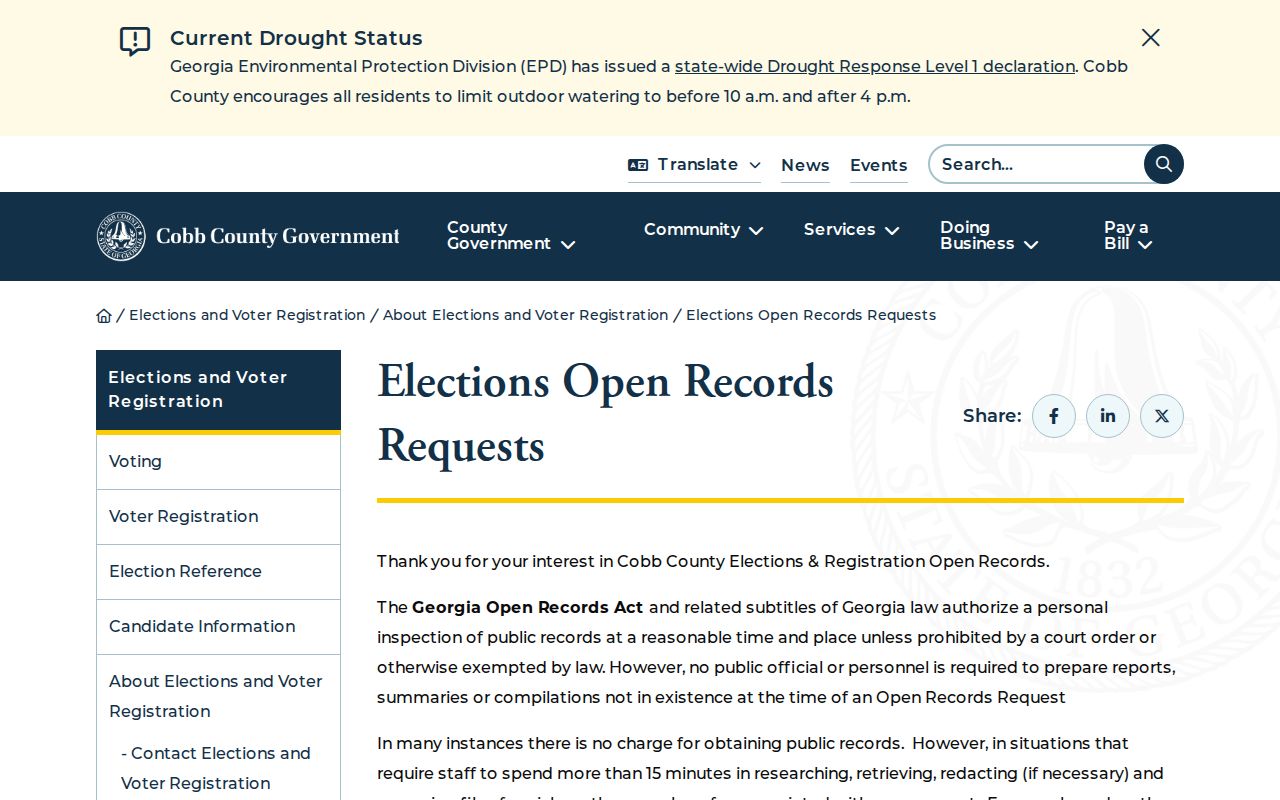
Cobb Elections is at 995 Roswell Street NE, Marietta, with weekday hours from 8 to 5 and phone (770) 528-2581. Staff time after the first 15 minutes may be charged.
Protected Acworth Homes Stay Hidden
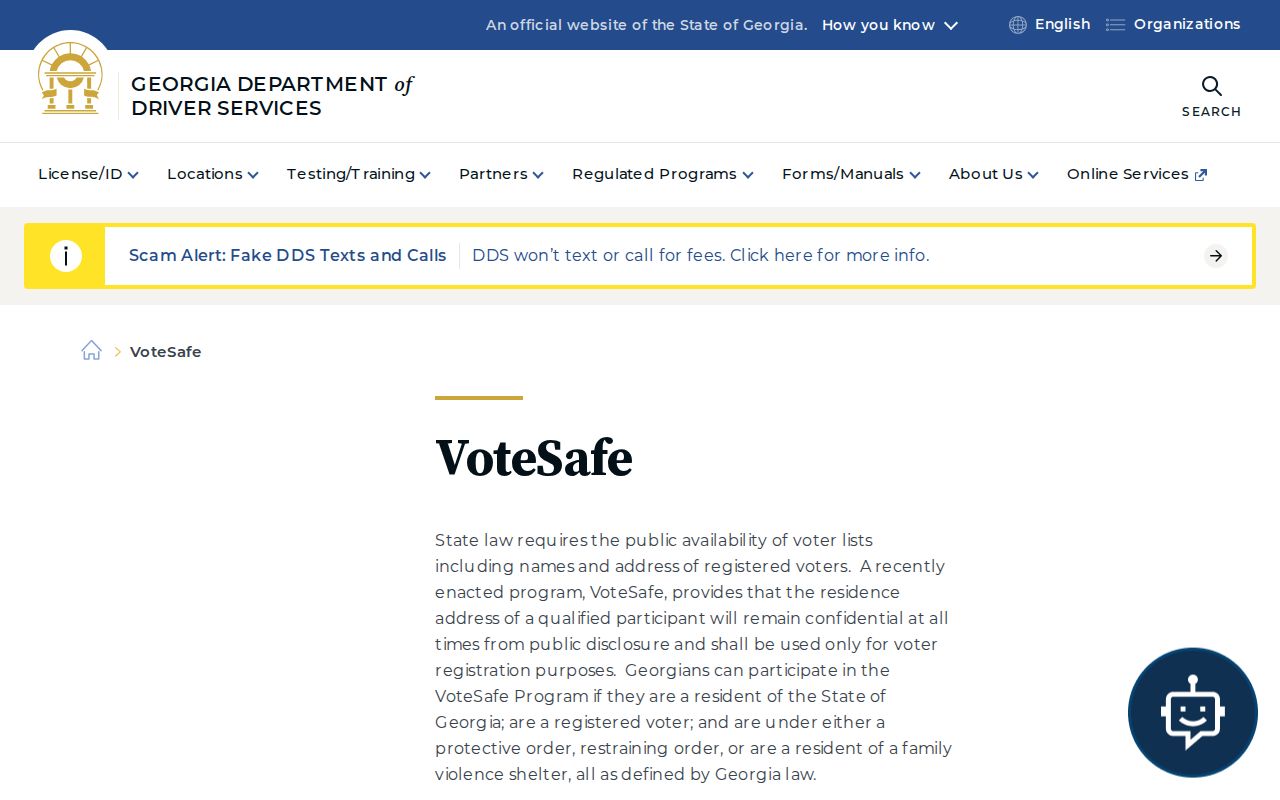
VoteSafe, under O.C.G.A. § 21-2-225.1, hides the actual residence of qualified registered voters with a protective or stalking order, or a bona fide shelter residence. Georgia Safe at Home is a broader substitute-address and mail-forwarding program that launched July 1, 2026 under O.C.G.A. §§ 50-18-150 through 155. The two programs should not be merged.
The official VoteSafe information explains the address protection available to eligible voters.
A protected address is a firm legal boundary. It is not a gap to solve through another roster, parcel search, or informal community contact.
Nonvoters and renters may also be absent without joining a protection program. Utility, delivery, school, and private contact data do not become public merely because someone wants a complete list of neighbors.
Acworth Neighborhood Context, Not Rosters
Official sources name Campbell Hill and Fifth Ward as historic Black neighborhoods, Collins Avenue as a historic district, and Historic, Parkside, and Mill as modern planning labels. These place names help a researcher interpret maps, church histories, oral histories, newspapers, and old directory entries. They are not government resident rolls.
No authoritative Acworth umbrella association inventory or public HOA member directory surfaced in the research. Private membership lists must not be promised as open records. Public contacts can still guide local-history questions, but they should not be asked to identify households.
Depot Park History Center
4794 S Main Street. The center holds more than 50 oral histories, produced history videos, photos, and local storyboards. It is listed as free and open daily from 8 a.m. to 9 p.m.
Cobb County Public Library
The county library catalog and research resources can lead to regional directories, local-history works, and staff help without implying a private neighborhood roster.
KSU Oral Histories
The Cobb County Oral History Series includes Acworth-related interviews about Campbell Hill, Fifth Ward, mills, farms, schools, mail, and family property.
The city's Black history page gives local context for Campbell Hill, Fifth Ward, and Zion Hill.
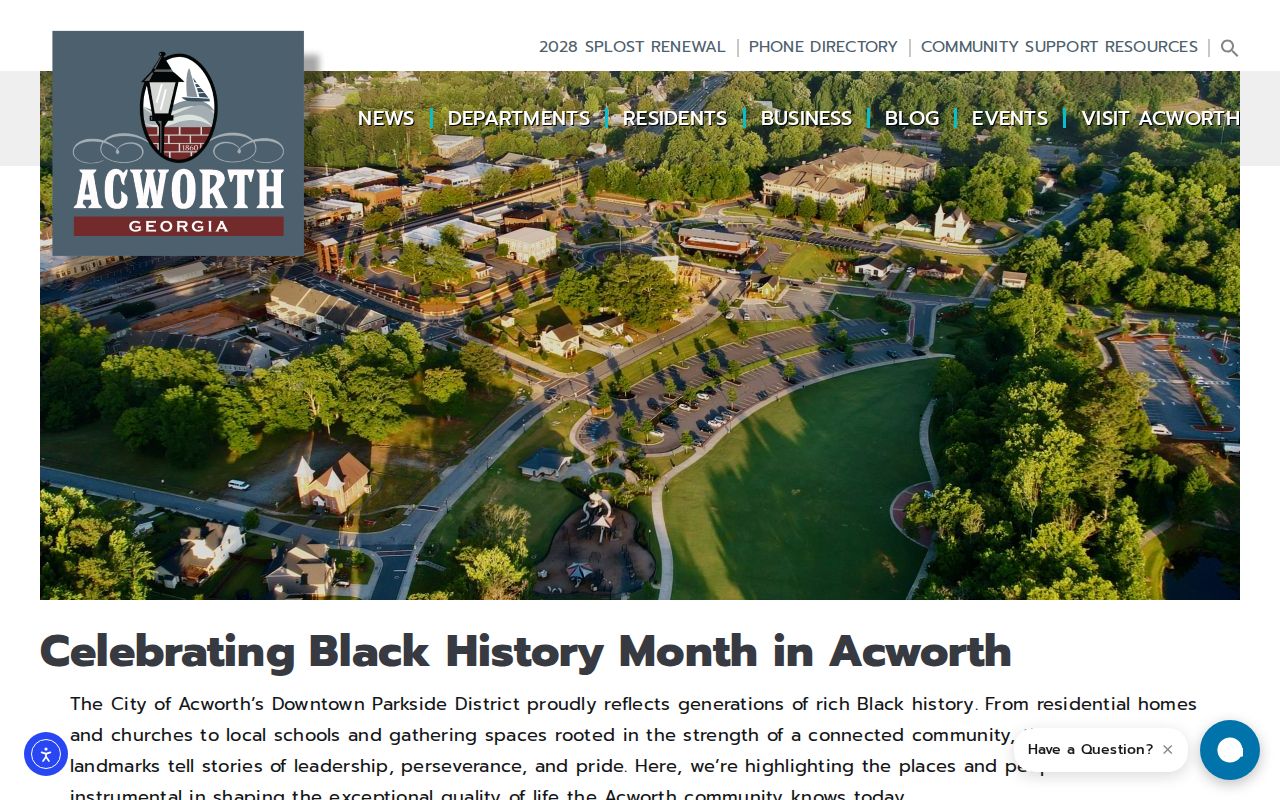
Use that history to choose the right place names in old searches, not to infer who lives on a modern block.
Read Earlier Acworth Neighbors
Modern parcel cards answer current ownership. Historical neighbors require sources made in the period. Regional directories from 1968 through 1970 and 1977 include street-and-avenue guides that can reverse an address into listed householders. A February 1973 white-pages run provides another subscriber snapshot. Entries are selective, so absence does not prove absence.
The 1930 Acworth Sanborn map can show house numbers, building footprints, uses, and block layout. Pair it with a directory year and the open 1950 census for a stronger household trail. Census records open after 72 years and are reached through National Archives resources. Older and later structures may need deeds, plats, permits, newspapers, and oral histories.
Acworth's historic grid follows the Western and Atlantic Railroad. The corporate boundary began as a half-mile depot radius in 1860 and grew to one mile in 1870. That old geometry, along with postal areas beyond today's city, can explain why a historic “Acworth” household is not where a modern ZIP search suggests.
Note: A reverse directory lists subscribers or householders at publication time, while a Sanborn map describes buildings and uses rather than every occupant.
Verify the Acworth Side
An Acworth mailing address can fall in Cobb, Cherokee, Paulding, or Bartow County, while incorporated Acworth lies in Cobb. Some legal city parcels even use a Kennesaw mailing line. Before looking up neighbors, check the city parcel map or tax district. Postal city and ZIP choose a mail route, not the records custodian.
Acworth GIS assigns new addresses inside city limits and maintains city mapping. Development services at 4415 Center Street can help with city geography. Recorded plats still belong to the Cobb Superior Court Clerk, and legal descriptions using land lot, district, subdivision lot, block, or metes and bounds survive changes to mail labels.
This geography also shapes emergency, police, permit, and election sources. An incorporated block usually routes city matters to Acworth. A postal Acworth block outside the city can route to a county or another jurisdiction. Verify first, then ask the correct office.
Privacy for Acworth Neighbors
Public block records are tools for property curiosity, civic research, local history, and responsible contact. They cannot reveal a complete household. Protected people, nonvoters, renters, children, and unlisted occupants may be absent. Sealed files, confidential identifiers, and protected addresses remain closed even when a parcel owner is public.
Correct an assessor error with the Cobb Assessor, a voter error with Cobb Elections, and a deed-index issue with the Superior Court Clerk. Do not spread a mistaken name from a compiled profile. A date and source label make every block note safer and more useful.
Lawful use. Research Acworth neighbors for lawful personal purposes only. Never use a name, map, address, or community contact to stalk, harass, monitor, or intimidate anyone.